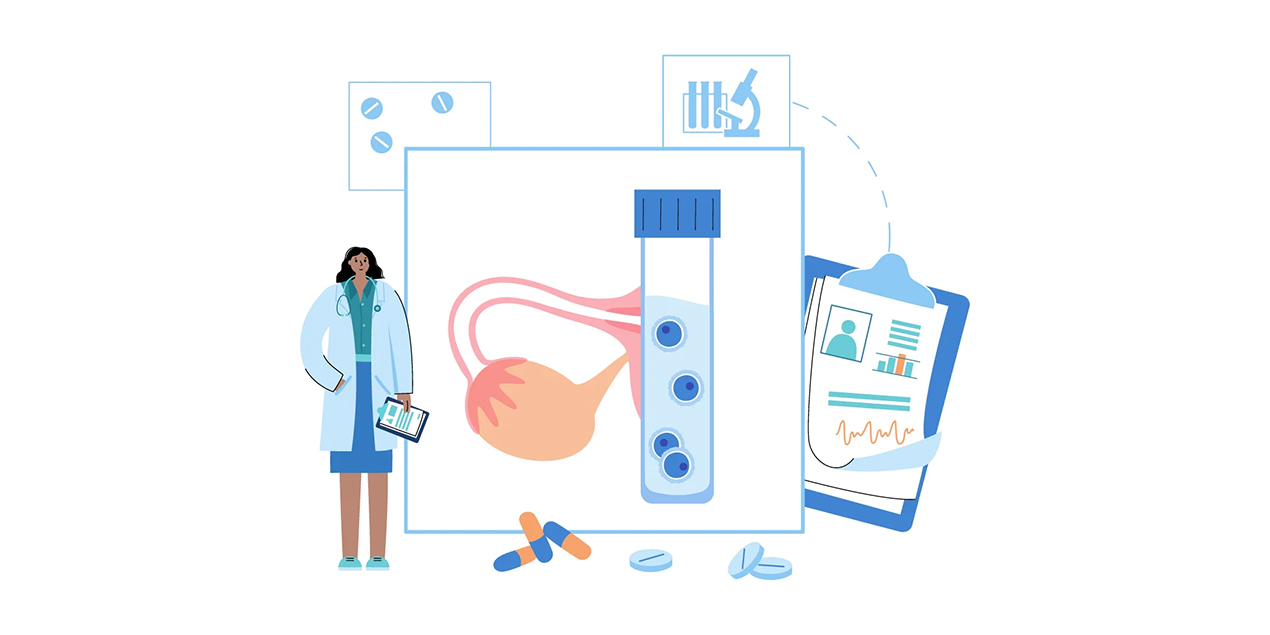
Natural cycle IVF treatment is low-cost since no medication or minimal medication is used. It is less physically demanding for the patient and may provide psychological comfort for women. Natural cycle monitoring can be performed each month starting with menstruation. As we know in IVF treatments, the goal is to obtain at least 5 eggs and select the one or two embryos that show the best development for transfer into the uterus. In this way, after injecting the best-selected sperm into mature eggs, the best embryos are chosen based on their development in the laboratory, thereby maximizing treatment success.
On the other hand, in some cases, even when the ovaries are stimulated with the highest doses of medication, it is not possible to obtain many eggs. These cases are generally women of advanced age or with limited ovarian reserve. In previous IVF attempts, despite the daily injection doses being increased to maximum levels, the number of eggs obtained was usually below 5, often only 1–2. Therefore, medication use may not actually be beneficial in these cases. Normally, in a menstruating woman, 1–2 follicles containing eggs develop in each cycle and are released from the ovary with the increase of a hormone called LH, and if they meet sperm in the fallopian tubes, pregnancy may occur. The principle of the natural cycle is to mimic this physiological mechanism.
In the natural cycle, after ultrasound and blood hormone evaluations performed on the 2nd–3rd day of menstruation, follicle monitoring is carried out either without medication or with very low doses known as minimal stimulation. Follicle size is usually checked around the 8th–9th day of menstruation. When the follicle reaches at least 17 mm, a trigger injection is administered, and egg retrieval is performed 35–36 hours later. Sometimes, the increase of LH hormone in the blood, which is responsible for egg maturation and release, is monitored, and the timing of egg retrieval is decided accordingly.
Who Is Suitable for Natural Cycle Monitoring Among IVF Treatment Protocols?
It is generally suitable for women who previously obtained only 1–2 eggs despite high-dose medication, those with limited ovarian reserve, poor-quality embryos, or women of advanced age.
Why Don’t We Stimulate Eggs with Natural Cycle in Everyone?
Since it is a more affordable and less demanding method for women, this question is frequently asked. Natural cycle is not an alternative to standard IVF treatment; it is only suitable for cases with limited ovarian reserve. While pregnancy rates of 40–60% can be achieved with standard IVF, this rate may be around 5% with natural cycle treatments.
Why Is the Pregnancy Rate Lower in Natural Cycle?
With medication-free follicle monitoring, only 1 or sometimes 2 follicles develop. To avoid the risk of premature ovulation, follicle size is measured by ultrasound around the 8th–9th day of menstruation, and when it reaches 17 mm, an HCG trigger injection is administered before ovulation occurs, followed by egg retrieval 35–36 hours later. Sometimes the follicle may be empty, no egg may be retrieved, or the egg may not be mature enough for microinjection. Even if sperm is injected into a mature egg, fertilization may not occur the next day. Another possibility is that an embryo may form, but cell division may stop during laboratory monitoring, leaving no embryo available for transfer. Therefore, due to all these reasons, natural cycle IVF should not be the first choice.
In summary, in natural cycle IVF treatment, the egg that naturally develops in the woman is monitored and retrieved when mature, then fertilized via microinjection. If an embryo forms and its quality is good, it is transferred into the uterus. This method can be considered as an alternative for cases with low ovarian reserve and for women over 40 who wish to continue treatment, as it is low-cost and can be performed monthly. Since no medication is used and the naturally developing egg is monitored each month, the likelihood of obtaining a high-quality egg may be higher. However, it should be known that this method does not improve egg quality, especially in advanced age cases where egg quality is already low. Natural cycle IVF is a good alternative for younger women with low ovarian reserve.


