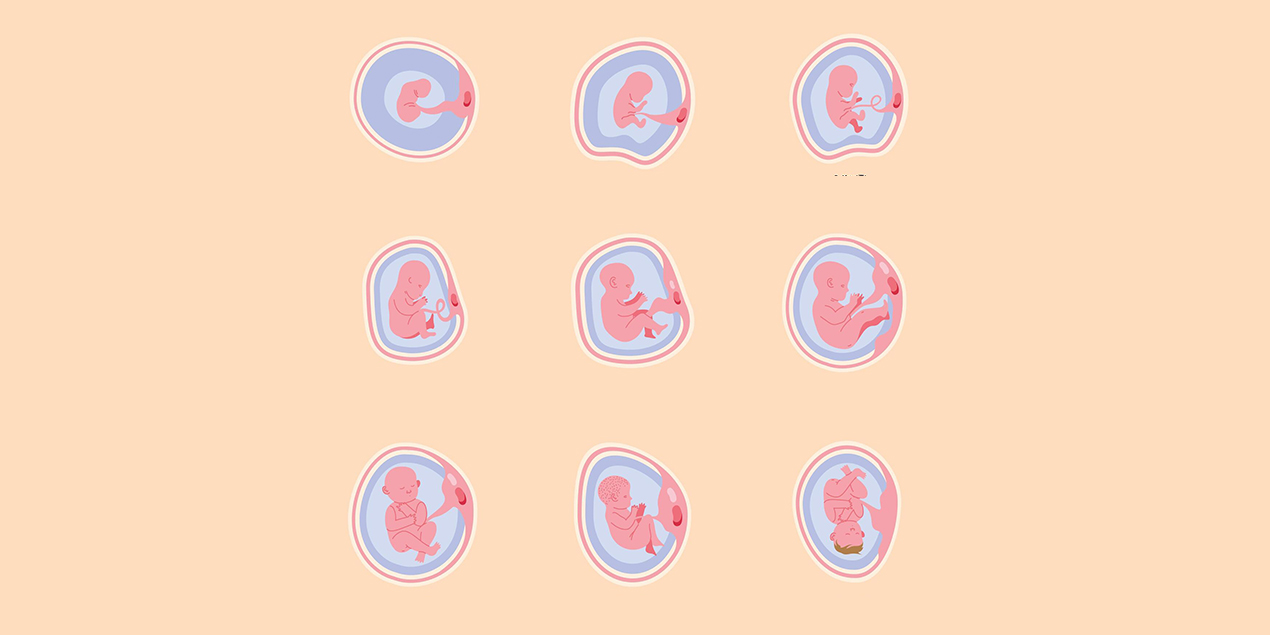
As of the 33rd week of the pregnancy period, swelling may occur in the expectant mother’s hands and feet. Swelling may also occur in her face and nose. These are temporary. Spots may also form on the expectant mother’s face; some of these may fade while others may be permanent. In the 33rd week of pregnancy, it is possible for these birthmarks to fade with various natural and chemical treatments available today.
In the 33rd week of the pregnancy period, your baby is now well-accustomed to the womb, spending part of the day sleeping, part resting, and part kicking, repeating this cycle throughout the day. His eyes are open and he can see his surroundings; his pupils dilate in the dark and constrict in the light. In the 33rd week of pregnancy, the baby’s subcutaneous fat accumulation is complete. This fat layer will be very useful to prevent the baby from getting cold after birth, as it will keep the baby warm.
What is the Height and Weight of Your Baby at 33 Weeks of Pregnancy?
In a 33-week pregnancy, the baby’s height has reached 43 cm. The weight has reached 2000 grams.
What are the Changes in the Expectant Mother in the 33rd Week of Pregnancy?
In a 33-week pregnancy, walking becomes even more difficult for the expectant mother. However, she should not give up and should continue to walk. The expectant mother must pay attention to her blood pressure; if it rises, she should immediately see a specialist and remain under observation. High blood pressure during pregnancy is quite risky. It is very dangerous for both the baby’s and the mother’s health. There is even a risk of the expectant mother losing her eyesight; therefore, her blood pressure must not rise.
In a 33-week pregnancy, the mother’s digestive system also poses a challenge. Since it becomes difficult for the mother to lean over or straighten up, any kind of sitting or standing can be a problem. Having someone to help the expectant mother with her daily tasks will make her work much easier.


