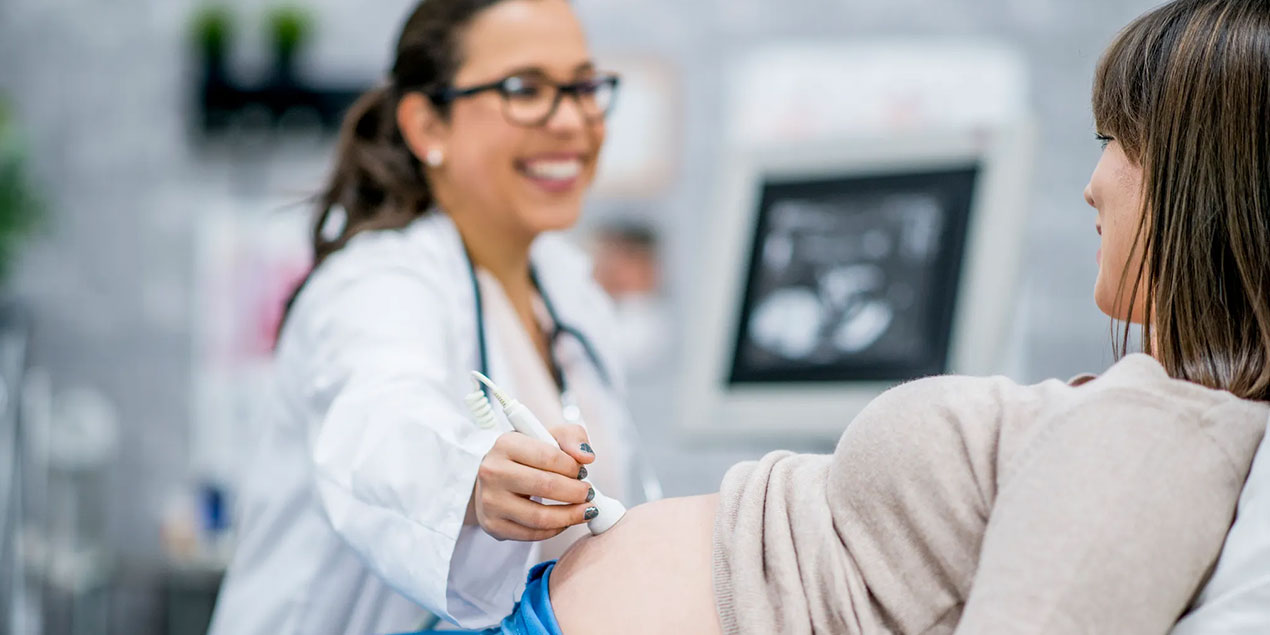
Endoscopic methods for infertility treatment and IVF (In Vitro Fertilization) are treatment methods that are increasingly applied today with growing success rates. These treatments are frequently performed due to tubal problems in women, ovulation issues, and male infertility, and many applications to increase treatment success are coming to the fore.
What is success in IVF and infertility treatments? At this point, the main determining factor is the age of the woman. As the woman’s age advances, the success of the treatment decreases. However, it is possible to optimize treatment success even in the presence of advanced maternal age. In recent years, embryo pooling, genetic studies on the embryo, and transferring the embryo to the uterus after evaluating the intrauterine environment have contributed positively to treatment success in advanced age cases.
One of the methods that increase the success of infertility and IVF treatments is endoscopic applications. We call these endoscopic methods laparoscopy and hysteroscopy. Hysteroscopy is an endoscopic procedure in which we look inside the uterus with a very thin optical device, and it does not require a hospital stay. It can be performed under light anesthesia. Generally, when we look into the uterus with a thin optic, we can treat the problems we see at the same time. Therefore, since we correct problems such as polyps, myomas, intrauterine curtains (septum), and adhesions that may prevent the embryo from attaching to the uterus, if we obtain a good embryo with the treatment to be performed the next month, the probability of this embryo attaching to the uterus will be higher. Since we usually perform the hysteroscopy procedure at the end of menstruation, it is possible to switch to infertility treatment with the next menstrual cycle. Only in the presence of very serious adhesions, it may be recommended to perform hysteroscopy more than once and not to proceed to infertility treatment until the inside of the uterus is completely normal.
Another endoscopic method that increases the success of infertility treatments is the laparoscopy procedure. In laparoscopy, it is possible to see and treat adhesions in the abdomen, swelling in the tubes, ovarian cysts, and myomas at the same time by entering through the navel with a thin camera. For example, when we see that the tubes are blocked in a woman with a uterine film (HSG), if this blockage causes swelling in the tube, it may be necessary to remove or close this swollen tube before proceeding to infertility treatment. When proceeding directly to treatment, the risk of ectopic pregnancy increases, and it becomes difficult for the embryo to attach to the uterus. For this reason, in women whose tubes are swollen or blocked in the uterine film, laparoscopy will both reveal the cause and allow us to solve the problem in the tubes at the same time. Again, applying infertility treatment after removing myomas that press on the inside of the uterus and narrow the uterine cavity with laparoscopy will increase the treatment success. Sometimes, in the presence of very large cysts in the ovaries or chocolate cysts (endometrioma), treating these pathologies with laparoscopy before proceeding to infertility and IVF treatments increases success.
When a couple with infertility problems comes to us, if the ultrasonography and uterine film (HSG) we perform point to suspicious situations, we can increase the success of the treatment we will provide by evaluating the uterus, tubes, and ovaries in more detail with laparoscopy and hysteroscopy and treating the problems simultaneously if necessary. From time to time, if there is no serious sperm problem, we see spontaneous pregnancies more frequently after hysteroscopy and laparoscopy. Therefore, we also call these endoscopic procedures fertility-enhancing methods.
In an infertile couple, when we perform hysteroscopy or laparoscopy before proceeding to IVF or infertility treatment, if there is no serious sperm problem and the woman’s age is young and her ovarian capacity is good, a waiting period may be recommended; spontaneous pregnancy may occur during this period. This period can be between 3 months and 1 year depending on the woman’s age. If the woman’s age is advanced, waiting poses a risk. However, if there is a sperm problem, or if the woman’s age is advanced or her ovarian capacity is limited, IVF or infertility treatment can be started 1-2 months after the endoscopic procedure.
IVF treatment and infertility treatments yield successful results of up to 80% today. However, endoscopic procedures called hysteroscopy and laparoscopy to be performed in some patients will increase the success of IVF and infertility treatment. Especially with a good evaluation of the couple during the first application, and in case of suspicious situations in ultrasonography or uterine film, it will be possible to be more successful and get good results in the first IVF application by treating these problems first.


