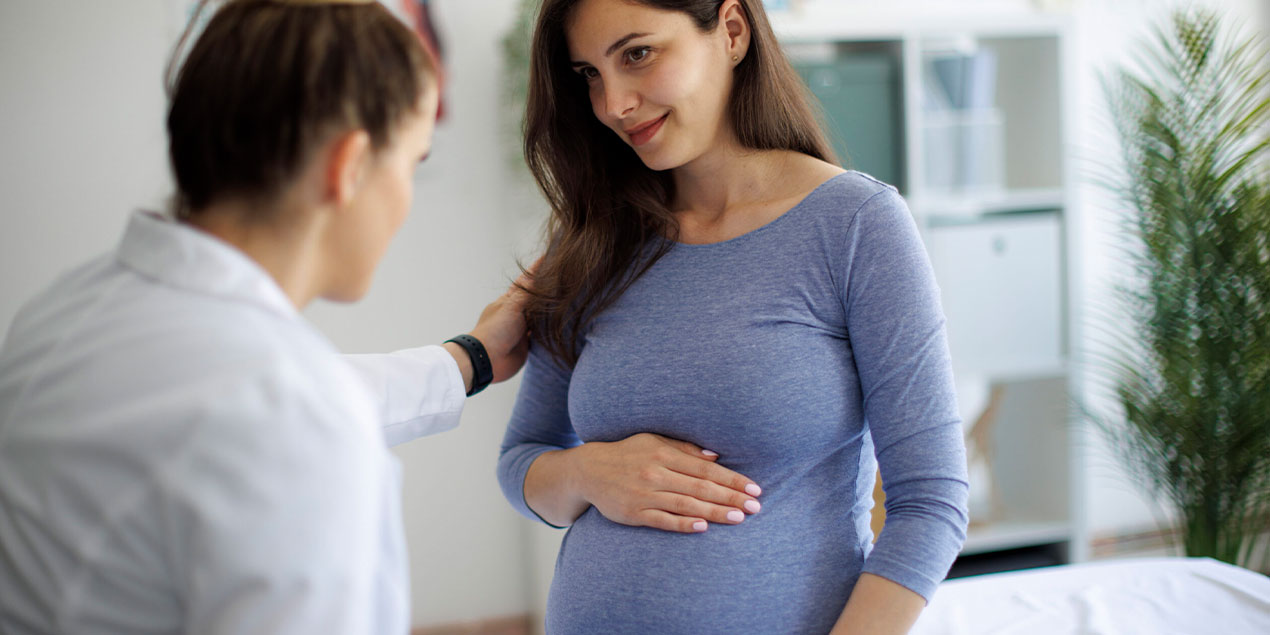
Fertility in women is the ability to conceive and have a baby. In a woman, fertility begins with the onset of menstruation around age 13 and usually ends around age 45. However, potential fertility lasts until about age 51, which is menopause.
The number of eggs a female child has at 5 months in the mother’s womb is approximately 6-7 million; this number drops to 1-2 million at birth. It gradually decreases during childhood, and starting from adolescence, this decrease continues by ovulating one egg per month, consuming an average of 350-400 eggs monthly until menopause. These eggs are stored in fluid-filled cavities called follicles within the ovaries. When a young girl enters her fertile years, monthly menstrual cycles begin. During each cycle, the ovary develops an egg. Rarely, there can be more than one. If this egg joins with a sperm cell from the male, pregnancy occurs.
The development of the egg cell depends on a fine balance of certain hormones and chemicals secreted from the ovaries and regions in the brain called the hypothalamus and pituitary gland.
MALE FERTILITY: MEANS THE ABILITY TO GET A WOMAN PREGNANT. TO ACHIEVE THIS, THE MALE REPRODUCTIVE SYSTEM MUST BE ABLE TO PRODUCE AND STORE SPERM, AND THESE STORED SPERM MUST BE TRANSPORTABLE OUT OF THE BODY.
While a woman is born with all the egg cells she will produce in her lifetime, a man has the ability to constantly produce new sperm throughout his life. After reaching puberty, a man’s sperm stores are renewed approximately every 72 days.
FERTILIZATION: THE COMING TOGETHER OF SPERM AND OVUM TO UNITE.
CONCEPTION: THE OCCURRENCE OF PREGNANCY (FERTILIZATION).
PREGNANCY: THE DEVELOPMENT OF AN EMBRYO OR FETUS IN THE FEMALE REPRODUCTIVE SYSTEM AFTER THE UNION OF THE OVUM AND SPERM.
Humans begin life as a single cell, a fertilized egg, or a zygote. In the nucleus of each of these cells, there are information codes called DNA (deoxyribonucleic acid) that come together to form genes. These genes form structures called chromosomes.
A human zygote contains 46 chromosomes consisting of 23 pairs. Half of these come from the father and the other half from the mother.
Besides being stored with information, DNA also has the ability to replicate itself. Without this replication ability, cells cannot multiply and cannot transmit information through generations.
SMOKING
Smoking can reduce fertility in women. Passive smoking acts in the same way. Nicotine taken through smoking affects the cells in the ovaries, making the woman’s egg more prone to genetic anomalies. In addition to damaging egg cells, nicotine can also cause menopause to occur earlier than expected. Before menopause, the ovaries of women who smoke become resistant to producing healthy eggs. While smoking makes natural conception difficult, it accelerates miscarriages. High miscarriage rates are reported in women who use cigarettes and alcohol during pregnancy.
In men, a link has been shown between smoking and a decrease in sperm quality, although its effect on fertility is not yet very clear. It is clear that quitting smoking will generally improve health quality.
If you smoke, we recommend quitting for your entire life and reproductive health.
STRESS
The effect of stress on infertility is significant. For example, stress can cause anovulation (lack of ovulation) in women. It is very clear that infertility treatment, whether through classical or IVF methods, can cause various degrees of psychological pressure on couples, such as great stress, anxiety, tension, fear, insomnia, distress, and depression.
In some infertility cases, when pregnancy occurs within a very short treatment period or on the first attempt, such psychological difficulties can be overcome more easily. On the other hand, in couples who cannot get pregnant despite long-term treatment, problems can become more severe.
Receiving support from our psychologist during the treatment process will significantly contribute to overcoming this stress. Studies have shown that reducing stress can increase your chances of success.
CAFFEINE
Studies have shown that daily caffeine intake should be kept below 50mg per day. In this way, the effect of caffeine in reducing the chance of pregnancy can be avoided. Caffeine is found in varying amounts in coffee, cola, tea, and chocolate.
WEIGHT
The “Body Mass Index (BMI)” is used to determine whether a woman’s weight is compatible with her height. If a woman’s BMI is between 20-24, it is considered normal; between 25-29 is overweight; between 30-39 is obese; and 40 or above is morbidly obese.
For women with a Body Mass Index (BMI) over 30, losing weight will increase the chance of pregnancy and prevent negative situations caused by excessive weight in case of pregnancy, such as having a large baby, difficult birth, and the tendency to require a cesarean section.
In addition, being underweight is also a factor that negatively affects fertility. In women with a BMI below 20, the menstrual cycle may be disrupted, and in cases of extreme weight loss due to some eating disorders and excessive exercise, periods may disappear completely. Studies have shown that more than half of underweight women conceive spontaneously after gaining an average of 2,700 to 3,600 kg.
VITAMIN SUPPLEMENTATION
Studies have shown that the use of folic acid before pregnancy occurs reduces the probability of neural tube defects in babies by almost 50%. For this reason, we recommend that women planning to become pregnant take at least 0.4 mg of folic acid every day 1-2 months before pregnancy.
Lettuce, avocado, dill, walnuts, almonds, broccoli, peas, spinach, melon, banana, orange, cabbage, green pepper, flour products, and bread are excellent sources of folic acid. If you are not sure if you are getting enough folic acid, you can use multivitamin preparations containing folic acid.
INTERCOURSE PLANNING
For a patient who menstruates every twenty-eight days, the average ovulation day is the 14th day; for a patient who menstruates every 30 days, it is the 16th day. That is, the post-ovulatory period is fixed and is generally 14 days. Therefore, the ovulation period in patients with regular periods can be found by subtracting 14 from the period between two menstruations. However, the ovulation day may vary by +/- 3 days. Therefore, to increase the chance of pregnancy, the active sexual intercourse period should be extended. In patients with regular periods every 28 days, if intercourse occurs every two days between the 10th and 17th days of the cycle (counting from the 1st day of bleeding), 75% of couples will become pregnant at the end of 6 months if there is no problem.


