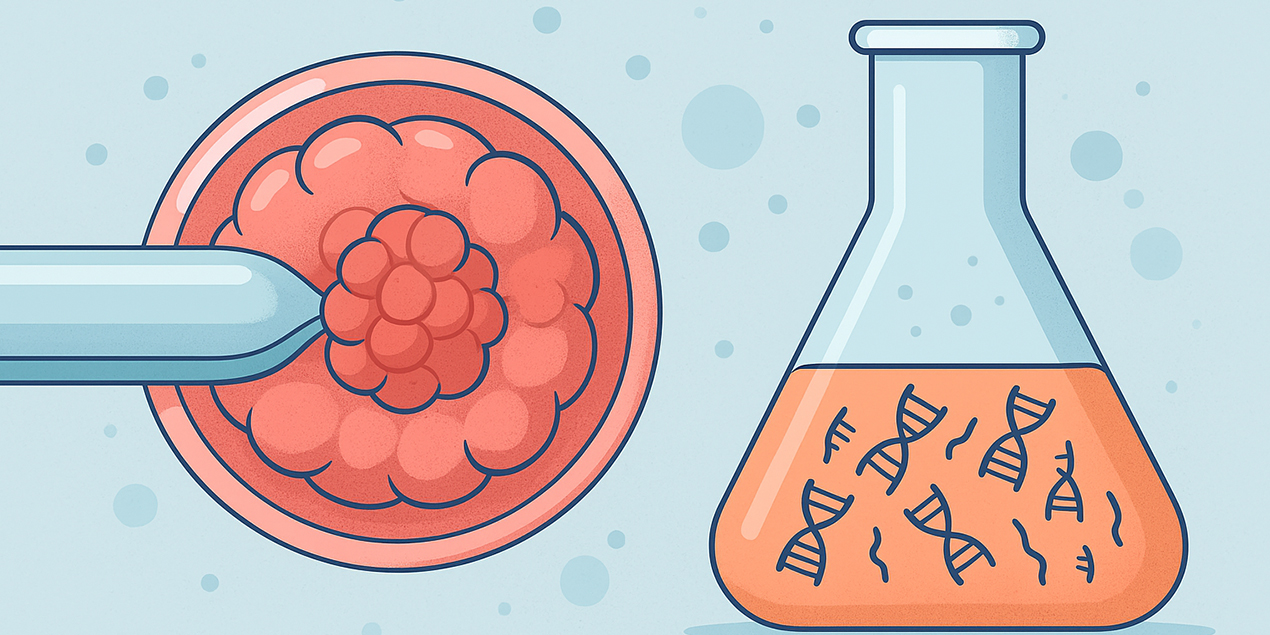
An embryoscope is a special incubator system used in laboratories where embryos are placed, equipped with an internal camera that continuously records embryo development.
In IVF treatments, laboratory equipment is an important factor influencing success. In addition to the experience of the team, the quality of incubators—special cabinets where embryos are kept until transfer—is also important. Incubators have evolved technologically over time, and those with multiple compartments are now commonly used. Recently, the latest technology incubator, the embryoscope, has taken its place in IVF laboratories.
When embryos are monitored in an embryoscope, there is no need for embryologists to remove them from the incubator for daily evaluation under a microscope.
The camera within the embryoscope continuously records the embryo’s morphology, dynamic development process, cell division, and speed. This continuous embryo monitoring system provides an advantage in selecting the embryo to be transferred.
Embryos that develop too slowly or faster than expected tend to have lower pregnancy potential. Therefore, selecting embryos that show development and division consistent with the expected timeline and transferring them into the uterus can increase pregnancy rates.
In the continuous embryo monitoring system called the embryoscope, important information can be obtained in patients who have previously experienced unsuccessful IVF attempts. It provides insights into embryo development speed, progression, and overall embryo quality. These data are important indicators of the embryo’s potential to result in pregnancy and may also reveal whether previous failures were embryo-related.
When classical incubators are used, embryos must be removed daily and examined under a microscope to evaluate cell number, morphology, and division status in order to determine embryo quality.
During the 2–5 day monitoring period before transfer, embryos are usually taken out of the incubator daily, sometimes even twice a day, for microscopic examination. In laboratories using embryoscopes, daily monitoring can be performed without removing embryos from their environment.
Additionally, the exact timing of cell division and the onset of fragmentation can be observed clearly, allowing differentiation between slow-developing and well-developing embryos. It is not desirable to frequently remove embryos from incubators during monitoring, as changes in temperature and gas levels may negatively affect development. Incubators are specialized cabinets with carefully controlled temperature, oxygen, and carbon dioxide levels.
Another advantage of the embryoscope is that it provides detailed and objective information about the embryonic aspect of treatment when pregnancy does not occur, allowing this information to be shared with the patient. It can help guide the focus toward other factors when pregnancy is not achieved.
A further advantage is that it allows embryo evaluation by multiple specialists. Instead of relying on the judgment of a single embryologist based on a few observations, the embryoscope continuously monitors embryo development, making it a system that may enhance pregnancy chances.
In the future, it is likely that all incubators will be based on continuous monitoring systems, reducing variability between observers and improving standardization.


