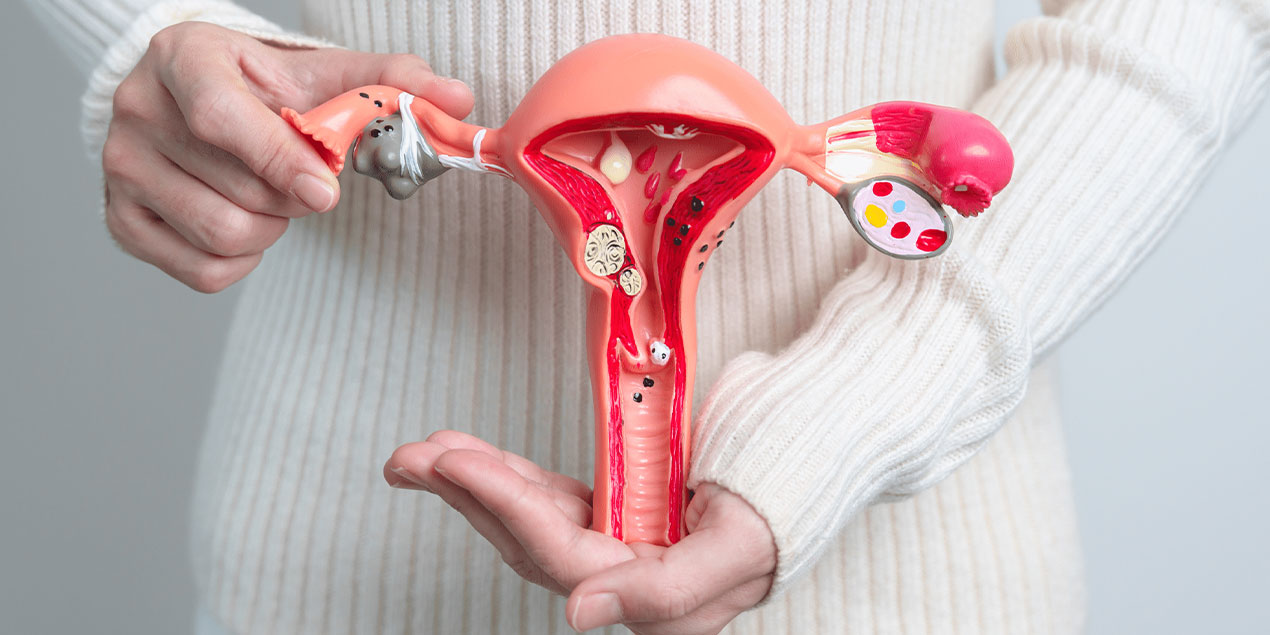
Polycystic Ovary Syndrome (PCOS) or Polycystic Ovary Disease (PCOD) is a gynecological disease resulting from hormonal imbalance. It is the most common gynecological hormonal disorder in women of reproductive age, seen in one out of every 7 women.
What is Polycystic Ovary Syndrome?
Polycystic Ovary Syndrome (PCOS) is a hormonal disease that leads to ovulation problems. In women who have menstrual irregularities accompanied by hair growth, excess weight, or a desire for a child, polycystic ovary disease should be the first thing that comes to mind. Although polycystic ovary disease can occur in young girls, it is rarer. Since the ovarian appearance of young girls on ultrasonography is like a polycystic ovary image, there may be confusion in diagnosis. However, the most important critical factor in young girls is excess weight, and it would be appropriate to suspect this disease in young girls who gain weight rapidly.
In the examinations of polycystic ovary syndrome patients, although numerous eggs are seen on ultrasonography, the eggs cannot mature and rupture. Since one of the eggs cannot grow spontaneously by getting ahead of the others, no rupture occurs at the time of ovulation; therefore, menstruation is delayed. Sometimes late ovulation can occur, meaning one of the eggs can grow and rupture even if delayed; in this case, menstruation occurs spontaneously after 1.5-2 months. However, in a polycystic ovary patient who does not menstruate without medication, since there is no growth and rupture in the eggs even if delayed, menstruation does not come spontaneously, and menstruation is not seen without medication.
What are the Symptoms of Polycystic Ovary Syndrome?
Polycystic Ovary Disease is actually a metabolic disease, meaning it can lead to health problems other than gynecological problems. The following signs and symptoms point to Polycystic Ovary Disease:
- Delay in periods
- Increase in hair growth (hirsutism)
- Acne
- Increase in skin oiliness
- Hair loss
- Weight gain
- Infertility
Young girls go to the dermatologist with complaints of acne, oily skin, or hair loss, but the diagnosis is actually polycystic ovary disease.
Prof. Dr. Banu Kumbak Aygün
What Causes Polycystic Ovary Syndrome? When Does It Occur?
Although studies on why Polycystic Ovary Syndrome occurs or why the disease is formed point to underlying blood sugar insulin metabolism disorders and genetic predisposition, the main problem can be expressed as the disruption of hormonal balance as a result of the presence of numerous follicles smaller than 1 cm in the ovaries. Consequently, excessive weight gain and ovulation problems further exacerbate the disease, thus creating a vicious cycle.
There are different types of polycystic ovary disease. While it only causes menstrual irregularity in some women, it can lead to serious problems such as inability to menstruate without medication, excessive weight, acne, diabetes, and high blood pressure in others. The menstrual irregularity seen in polycystic ovary disease indicates that ovulation does not occur or is delayed. Ovulation irregularity is the cause of the infertility problem that can be seen in polycystic ovary patients.
How is Polycystic Ovary Syndrome or Disease Diagnosed?
To diagnose Polycystic Ovary Syndrome, delayed menstruation, excess weight, or the appearance of polycystic ovaries on ultrasonography—meaning the observation of at least 10 follicles of 1 cm—is sufficient. In fact, some polycystic ovary patients are thin, and only the polycystic ovary appearance is present on ultrasonography; there may also be an increase in hair growth. On the other hand, blood hormone tests can also be performed to strengthen the diagnosis in patients where there is hesitation.
Polycystic ovary disease comes to mind first in all young girls and women whose periods are delayed. Especially in young girls or women who are slightly overweight and whose periods occur every 2-3 months or who do not menstruate without medication, polycystic ovary disease is seen.
How is Polycystic Ovary Syndrome Treated?
In the treatment of Polycystic Ovary Syndrome, it will be appropriate to regulate periods and, if there is a desire for a child, to use drugs that stimulate the ovaries. It should not be forgotten that the most important and first step is losing weight and exercising at least three days a week.
1- First Things to Do
Weight Loss
The first thing to do in the treatment of Polycystic Ovary disease is to lose weight if there is excess weight, thereby breaking insulin resistance. Generally, PCOS is seen in young, overweight women who have irregular periods and hair growth problems. Our first recommendation is to ensure weight loss and suggest exercise. Sometimes there may also be insulin resistance, making it difficult to lose weight. In this case, the way to break this vicious cycle is through exercise. With a diet low in carbohydrates and high in fiber along with exercise, periods can even become regular spontaneously without medication. In some women, drugs given only to break insulin resistance can also regulate periods.
Acne or Hair Growth Treatment
In polycystic ovary patients who are not overweight, periods are regulated by using birth control pills or drugs containing progesterone. Again, in polycystic ovary patients with acne or hair growth problems, the use of birth control pills and some hormonal medications will be beneficial.
Insulin
In PCOS patients where we detect insulin resistance, periods may become regular with medications containing metformin. It is necessary to use these drugs for at least 6 months. Again, in these women, there may be elevations in TSH (thyroid gland hormone) or prolactin (milk hormone); when we correct these with medication, periods become regular spontaneously, and pregnancies occur.
2- Surgical Methods
In women with Polycystic Ovary Syndrome, treatment was attempted for a while by opening small holes in the ovaries laparoscopically. However, due to the requirement for anesthesia and the risk of undesirable conditions such as early ovarian reserve depletion, this surgical method called laparoscopic ovarian drilling (LOD) has been abandoned today.


