In couples who want to have children, the first evaluation consists of the woman’s examination and ultrasonography, the woman’s hormone tests, the woman’s uterine film (HSG), and the evaluation of the man’s sperm analysis. When a problem is detected as a result of this initial evaluation, the first treatment should be to eliminate, namely treat, the detected problems.
For example, if a problem is detected in the woman’s examination, ultrasonography, and uterine film, spontaneous pregnancies can occur after solving these problems without the need for advanced treatments. For instance, when swelling or blockage in the tubes is seen on the woman’s uterine film, the chance of pregnancy will increase both spontaneously and with IVF treatment after opening the tubes or, if opening is impossible, after removing the swollen parts. If one of the tubes is swollen, fluid may accumulate in this tube and negatively affect the implantation of the embryo in the uterus and the continuation of the pregnancy. In such cases, spontaneous pregnancy can occur with the healthy tube after removing the problematic tube. On the other hand, if there is swelling or blockage in both tubes, it may be necessary to remove both tubes, and then proceed to IVF treatment. This is because there are two tubes in the body, and when both are problematic, spontaneous pregnancy cannot occur.
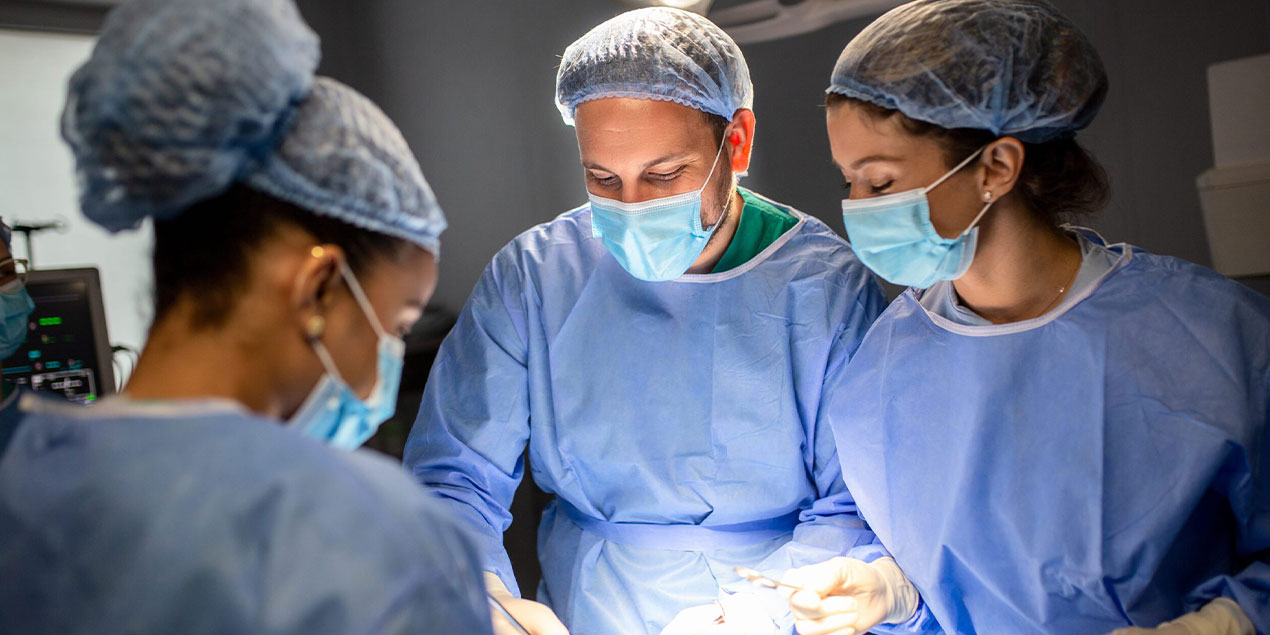
We can best evaluate the tubes with a uterine film (HSG). Therefore, the uterine film provides us with very valuable information. When we see a suspicious situation on the uterine film, the next step is the endoscopic operation called laparoscopy. In the laparoscopy procedure, while the patient is sleeping under anesthesia, the abdomen is entered with a very thin optical camera through the navel, and adhesions in the abdomen, swellings and blockages in the tubes, the relationship of the tubes with the surrounding organs, and whether the passage of the fluid given through the tubes is normal can be clearly seen. Therefore, laparoscopy is a useful endoscopic operation we perform both to clarify the diagnosis and to treat the pathology at the same time. It takes about 1 hour, and we discharge the patient on the same day or the next day. Since the procedure is performed through only 2-3 holes of 1 cm in the abdomen, there are no stitches or cesarean-like incisions. Therefore, there is less pain after the procedure. Only gas pains may occur after the operation, and these complaints can be controlled with appropriate medications.
Laparoscopy operation is applied not only in the diagnosis and treatment of problems related to the tubes but also in the treatment of ovarian cysts, removal of myomas in the uterus, surgical treatment of chocolate cyst disease (endometriosis), and opening of adhesions developed due to infections in the abdomen. Since it is a closed surgery technique, patient compliance and comfort are much better.
Another application area of laparoscopy is the treatment of uterine anomalies that can also lead to infertility or recurrent miscarriages. When a congenital or later-acquired anomaly in the uterus is suspected via ultrasound or uterine film, the outer surface of the uterus is observed from within the abdomen by entering through the navel with a camera, and the size of the anomaly in the uterus is determined. Simultaneously, a hysteroscopy procedure can be performed by entering the uterus through the vagina with a thin optic, thus treating problems such as a septum or serious adhesions in the uterus at the same time. In some complicated uterine anomalies, laparoscopy is performed together with hysteroscopy, making it easier to correct the anomaly in the uterus.
As a result, laparoscopy is successfully applied in the treatment of women who want to have children and have problems detected in their tubes, ovaries, or uterus during their examination. With laparoscopy, treating or removing tubes, removing ovarian cysts, treating endometriosis, removing myomas in the uterus, and opening intra-abdominal adhesions can be easily performed. Since problems are resolved after laparoscopy, the chance of pregnancy will increase spontaneously or with IVF treatment. Therefore, we can say that laparoscopy is an endoscopic method that increases fertility. Since laparoscopy is an endoscopic procedure performed with a closed system, patient comfort is also high. Therefore, today, infertility surgery is generally performed laparoscopically.


